Our News
Events
(09-09-2025)
Where Do We Stand While the World Talks About Healthy Living? 33rd WorldFood Istanbul 2025 Observations
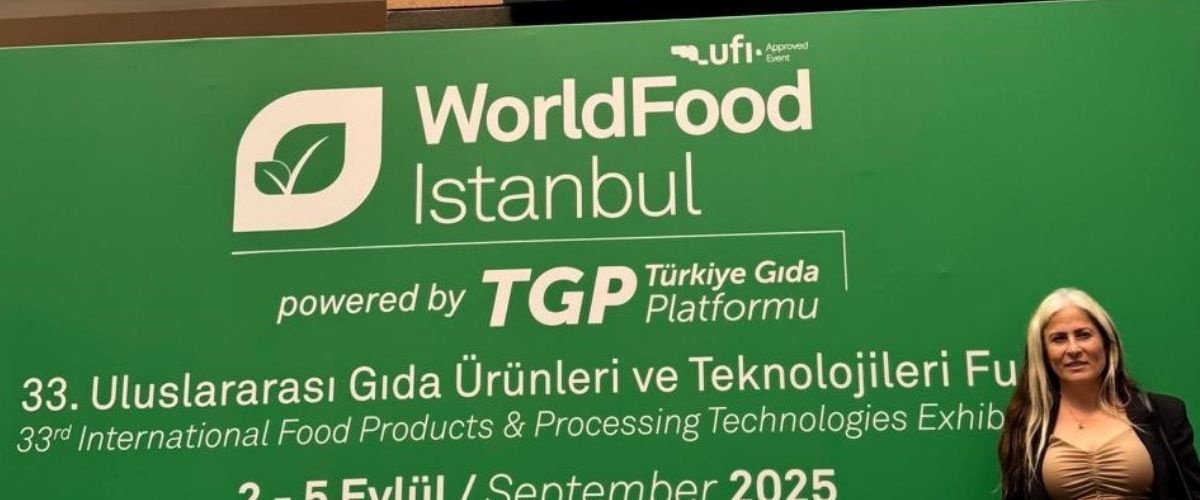
In September 2025, the 33rd WorldFood Istanbul brought together more than 900 purchasing professionals from over 100 countries. We visited the 33rd International Food Products and Technology Fair – WorldFood Istanbul, where brands, manufacturers and professionals from all over the world come together, to evaluate the current trends and future plans of the food industry. However, one of the most striking realities we observed at this major gathering was this: while healthy and functional foods are on the rise worldwide, the space allocated to this category in Türkiye is still quite limited.
Growing Interest in Healthy Living – But Is It Enough?
It is no longer a secret that interest in healthy eating has increased, especially in the post-pandemic period. Global data shows that consumers are no longer satisfied with simply quenching hunger; they are seeking support for immunity, energy, focus, and even mood. For instance, according to the NielsenIQ 2025 Global Health Trends Report, 67% of consumers believe that “food is also a form of health investment.”
However, our observations at WorldFood Istanbul revealed that in Türkiye, this awareness has not yet transformed into a broader lifestyle culture.
Healthy Foods at the Exhibition… Where?
The exhibition hosted hundreds of brands and thousands of products. Packaging was flashy, flavors were bold, and technology was a hot topic. But when it came to booths that stood out with labels such as “healthy food,” “clean ingredients,” or “functional products,” they could be counted on the fingers of one hand.
There are still very few local producers in categories such as gluten-free, sugar-free, additive-free, natural, probiotic, and adaptogen-based products. Yet the rest of the world has already started its transformation in these areas.
Even more striking: the majority of brands offering healthy products still position them as a luxury consumption item. In reality, a sustainable health approach must become a standard accessible to all segments of society.
Healthy Living Culture in Türkiye: Still a Niche Field
Healthy living is not just a “trend” but a holistic way of life. Yet in Türkiye, this area still appeals to a limited audience:
- Residents of large cities,
- Relatively higher socio-economic groups,
- Conscious consumers,
- Those informed via social media or functional medicine.
However, healthy living is a right for everyone.
This year’s exhibition once again showed that Turkish producers are still taking only limited steps toward healthier production.
What Is the World Doing?
Globally, food is being positioned not just as “nutrition” but as a preventive health tool.
Functional foods are developed not only to satisfy hunger but also to strengthen immunity, improve sleep quality, support focus, and reduce stress.
In recent years, nutritional approaches have been shaped around the philosophy of “food is medicine.” According to this view, foods are not merely sources of daily energy but also natural remedies that protect health, prevent disease, and improve quality of life.
Today, the concept of longevity – long and healthy living – is gaining importance worldwide. People seek not only to extend lifespan but also to increase health span – the years spent in good health. In line with this vision, functional foods are coming to the forefront. Probiotics, adaptogens, antioxidants, and vitamin-enriched products are not only supporting daily nutrition but also playing a significant role in preventing chronic diseases and slowing down aging. This underscores that healthy food is not just a trend, but an indispensable investment in a long and high-quality life.
Key global trends for 2025 include gut health, high-fiber foods, probiotics, adaptogens, and superfoods. Within this context, functional foods, plant-based diets, textural innovations (crispiness, layered flavors), sustainable packaging, global flavors, protein diversity, and reduced sugar stand out.
Plant-based frozen protein products are emerging as alternatives to meat and dairy, especially for consumers committed to healthy living and environmental sustainability. In packaging, reducing plastic use is becoming a priority, with a shift toward recyclable glass materials and, increasingly, biodegradable packaging solutions.
Examples:
- Japan and South Korea are expanding anti-aging functional foods for their aging populations.
- The US and EU countries are bringing immunity-boosting adaptogen-based products onto supermarket shelves.
- Scandinavian countries are integrating low-glycemic, prebiotic-rich foods into child nutrition.
Meanwhile, Türkiye is still reproducing “classic flavors” under different brands, but content innovation lags far behind. On the other hand, in frozen foods, low-calorie, high-protein, vitamin-mineral rich, and gluten-free/organic/vegan alternatives are on the rise.
What Needs to Be Done?
Both producers and consumers in Türkiye need to view food as a health investment.
- Producers should offer more transparent content,
- Government policies should support clean-label, healthy products,
- Consumers should steer the market with conscious choices,
- Educational institutions and the media should promote healthy living not as a “fashion” but as a right.
Only through this holistic approach can functional foods – probiotics, adaptogens, antioxidants, and vitamin fortification – blur the boundaries between medicine and nutrition. In turn, the role of healthy nutrition in preventing chronic diseases will become more visible, ultimately reducing the need for medication.
What Are We Doing at PlantoHealth?
At PlantoHealth, we are proud to be part of this transformation. Every one of our products is developed with scientific references, natural ingredients, and an accessible health perspective. We aim not only to offer healthy but also smart food and food supplement solutions.
Health does not begin with treatment but with daily choices. And we are here to make those choices easier.
Semra Aktas Simsek
Chemical Engineer & Entrepreneur
General Manager, PlantoHealth
This article was written by Semra Aktas Simsek, with insights from OpenAI data and trend analyses.
Referanslar:
https://worldfood-istanbul.com/
https://nielseniq.com/global/en/insights/report/2025/global-state-of-health-wellness-2025/